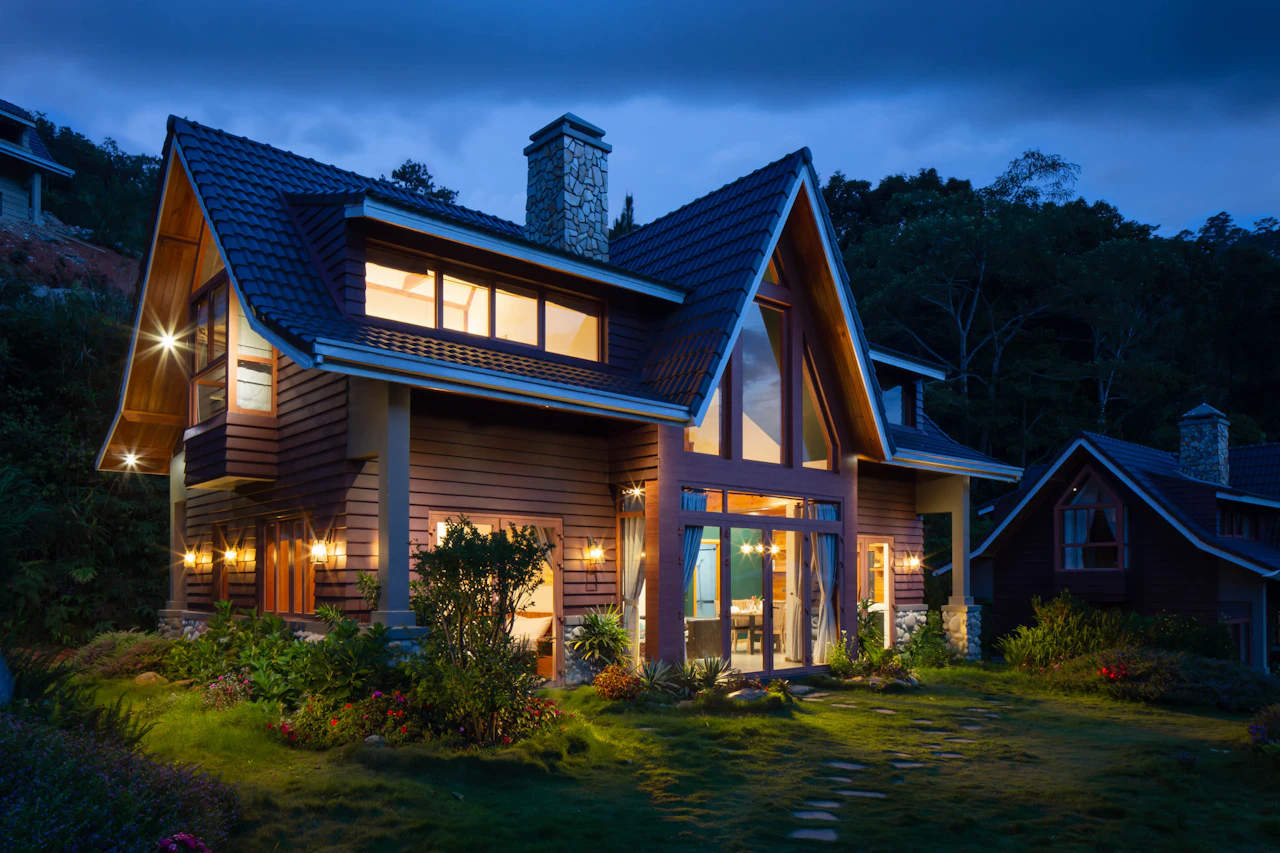
The debate over buying an apartment versus a landed house for investment comes up often in national media, but the math doesn’t necessarily translate the same way to every city. In Banjarmasin and South Kalimantan more broadly, the apartment market is still far thinner than the market for landed houses, and that changes many of the assumptions typically used in bigger cities like Jakarta or Surabaya. This article compares the two honestly, including how local realities should shape the right choice. Understanding that difference upfront helps you avoid the disappointment of expecting your purchase to behave exactly like what you’ve read in national coverage.
Landed Houses: Land Value That Keeps Growing
The main advantage of a landed house as an investment lies in the land underneath it. Unlike a building, which loses value over time through physical wear, land tends to hold or gain value, especially in a growing area. That means most of a landed house’s appreciation potential actually comes from the land, not the structure sitting on it.
A landed house also gives you freedom an apartment doesn’t offer, such as the ability to renovate, extend the building, or repurpose part of the space without needing approval from a building manager. Owners typically hold SHM (Sertifikat Hak Milik, or freehold title) over both the land and the building, the strongest form of ownership and the easiest to use as bank collateral. A landed house also offers long-term options an apartment doesn’t, such as subdividing part of the land to sell separately or adding to the structure later, provided the size and local zoning rules allow it.
Apartments: Strata Title and What It Means
Apartments operate under a different ownership structure known as SHM Sarusun (Sertifikat Hak Milik Satuan Rumah Susun), often referred to as a strata title. You fully own your individual unit while also holding a shared right over common areas such as the lobby, corridors, elevators, and other shared facilities, alongside every other unit owner in the building.
What’s worth understanding is that the right to the land the building sits on isn’t always equivalent to owning land under a landed house outright; some buildings are constructed on land held under an HGB right, managed collectively by the building’s management body or owners’ association, which adds a layer worth examining that a straightforward land-and-house purchase doesn’t have. Rules around strata housing keep evolving, so ask the developer or a notary directly about the certificate status and the underlying land’s legal standing before buying, rather than relying solely on the marketing brochure. For a basic data check, the official Sentuh Tanahku service from ATR/BPN is a useful starting point.
Day-to-day building management is usually handled by the PPPSRS (the owners’ and residents’ association) or a manager appointed by the developer. As a unit owner, you’re automatically bound by collective decisions on building upkeep costs, even if you don’t live there yourself.
The Costs Baked Into Apartment Ownership: Service Charges and IPL
One of the clearest differences between an apartment and a landed house is the recurring cost attached to it. Apartment owners must pay a service charge, also called IPL (Iuran Pengelolaan Lingkungan, or environmental management fee), every month, covering cleaning, security, elevator maintenance, and the upkeep of shared spaces. This fee is due whether or not the unit is occupied or rented out, and it’s usually calculated based on the unit’s floor area.
A landed house carries no equivalent obligation. Its only annual liability is PBB (land and building tax), and maintenance spending is entirely at the owner’s discretion, which means it can be deferred or scheduled around what you can afford. This makes a landed house’s cost structure feel more flexible, while an apartment demands a fixed monthly commitment regardless of the unit’s condition.
Rental Yield vs. Capital Gain: Different Personalities
In general, apartments in major cities are often marketed on the strength of higher rental yield, since the per-unit price is more accessible and the target tenant is a young professional or single worker who values proximity to the city center. As a rough benchmark across the Indonesian market broadly, apartment rental yields often run in the five-to-eight percent range annually, somewhat above the three-to-five percent typical for landed houses.
Landed houses, however, have historically been the more reliable engine for long-term capital gain, since limited land supply tends to keep prices climbing in sought-after areas. It’s worth flagging that the yield figures above come from mature, liquid apartment markets in big cities, and they won’t necessarily hold in a city with a still-limited apartment supply like Banjarmasin, where the pool of tenants and comparable transactions is much smaller. Apartment rental demand in big cities is also driven heavily by working-age people migrating toward the city center, a pattern that hasn’t really taken hold in secondary cities like Banjarmasin, so tenant-demand assumptions from a metropolitan market shouldn’t be applied here without question.
Liquidity: Which One Sells Faster
Liquidity is one of the most important considerations, and one of the most often overlooked. Landed houses draw from a broad buyer pool, including families looking to live in the home themselves, investors, and buyers after the land for redevelopment. That breadth of demand generally makes a landed house easier to resell within a reasonable timeframe.
Apartments draw from a much narrower buyer pool, particularly in a city where the unit supply is still small. Prospective buyers are usually limited to investors or a specific group genuinely seeking a vertical-living lifestyle, and in a secondary city that group is far smaller than the pool of landed-house buyers. That means reselling an apartment unit in a city like Banjarmasin could realistically take longer than selling a landed house of comparable value.
The South Kalimantan Reality: Landed Houses Still Dominate
Beyond the general theory, it’s worth looking squarely at South Kalimantan’s actual property market. The supply of apartments or condominiums in and around Banjarmasin remains far more limited than in major cities like Jakarta, Surabaya, or Makassar. Much of the local population also retains a strong preference for landed houses and land ownership, whether for cultural reasons, the need for space to house an extended family, or the desire to hold land as an inheritance.
This backdrop makes landed houses and land plots a more proven investment instrument in the local market, with data that’s easier to verify. That doesn’t mean an apartment is never worth considering, but prospective investors should be honest that its liquidity in South Kalimantan is likely to differ substantially from a comparable apartment in a metropolitan city, and the decision should rest on the actual local market conditions rather than assumptions that hold true nationally. When comparing prices, a prospective apartment investor in South Kalimantan will also struggle to find many comparable transactions, unlike the landed-house and land market, where data is far more abundant and easier to verify through local agents and active listings.
Final Thoughts
There’s no single right answer between an apartment and a landed house, since each offers a different investment character: a landed house excels at land appreciation and liquidity, while an apartment offers potentially higher rental yield with a more predictable recurring cost. What matters most is matching that choice to the market you’re actually buying into, and in South Kalimantan, that means weighing carefully that landed houses still hold the advantage.
If you’d like a second opinion on property investment options in Banjarmasin and the surrounding area, the Vorneo Property team is happy to talk it through on WhatsApp, at no charge.


